How this page is funded: some links here are affiliate links, and Mesh & Signal earns a commission if you buy through them. It costs you nothing extra, it never changes which product we rank first, and we do not publish a price we have not verified. Full disclosure.
For a detached garage, buy the TP-Link Omada EAP610-Outdoor. It is an IP68 weatherproof Wi-Fi 6 access point that mounts outside, runs over PoE and works behind any router — which is the only approach that reliably crosses a gap between two buildings. The budget pick is the TP-Link RE315: cheap enough to try first, and enough for a smart door opener and a camera. If the garage already has a coax outlet, stop reading and buy the TRENDnet TMO-313C2K instead — a wired link beats every wireless answer on this page.
Work out which garage you have first
"Garage" covers three physically different problems, and the right product is different for each. Almost every disappointing garage Wi-Fi purchase is someone buying the answer to a problem they do not have.
Attached, sharing a wall with the house. This is just a far room with an uninsulated wall. A plug-in extender in the nearest indoor socket usually fixes it, and the RE715X is the one to buy.
Detached, with a wall or two of masonry and a yard in between. Wireless from indoors is fighting a concrete wall plus open distance plus another wall. An outdoor access point mounted on the house, aimed at the garage, is the answer — that is the EAP610-Outdoor.
Detached, but with coax or shared mains already running out there. The best case. You have a wire; use it. MoCA over the coax, or powerline over the mains, and the garage gets a real connection.
Concrete and cinder block are the reason the ordering on this page is not the ordering on our general extender page. A plug-in extender has to receive a usable signal before it can repeat one, and in a detached garage it frequently cannot — how much Wi-Fi a concrete wall eats is the number that explains why.
The four approaches, side by side
Product
Approach
Needs
Best case
TP-Link Omada EAP610-Outdoor
Outdoor access point, IP68
An Ethernet run to the mount point, PoE
Detached garage, any router
TRENDnet TMO-313C2K
Ethernet over coax (MoCA)
Coax outlets in both places
Garage with a TV aerial outlet
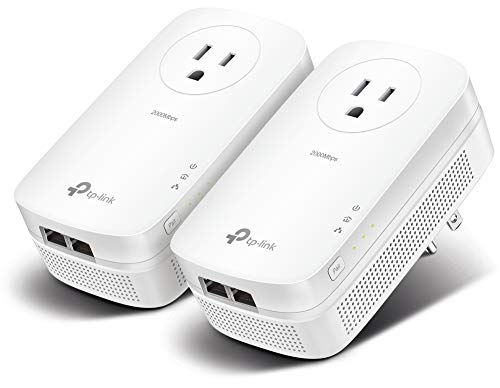
TP-Link TL-PA9020P KIT
Powerline, AV2000
Both outlets on the same panel
Garage on the house circuit
TP-Link RE715X
Wi-Fi extender, AX3000
A usable signal where you plug it in
Attached garage
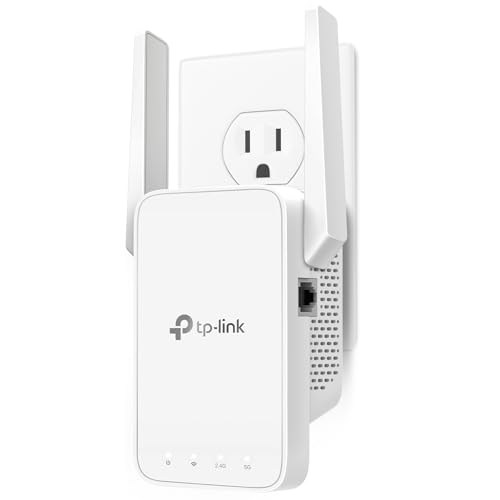
TP-Link RE315
Wi-Fi extender, AC1200
The same, with less to give
Door opener and a camera
Manufacturer-published specifications; see Sources. 'Needs' is the precondition that decides whether the approach is available to you at all.
Scroll the table sideways to see every column.
This usually backfires
Do not put the extender in the garage
The instinct is to plug the extender into the socket in the garage, where the signal is bad. That is exactly backwards: an extender repeats whatever it receives, so a weak input becomes a weak output for every device behind it. Put it in the last indoor socket that still has a strong signal — usually the hallway or a room sharing a wall with the garage — and let it project forward from there. Why your extender is not working is nearly always this.
If the garage is a workshop, not storage
A garage with a bench, a machine, a TV and a laptop in it is living space and deserves living-space treatment: a real access point or a mesh node with a wired link, not a repeater. The outdoor EAP is the brand-agnostic version of that; mesh systems with an outdoor node is the version for people already running a mesh they like, and the access point roundup covers the indoor equivalents, and the best outdoor access points ranks the weatherproof units against each other on IP rating and install effort if you have already settled on this route. The same logic applies to a finished basement, which we treat separately on Wi-Fi for a basement.
One practical note on the outdoor route: the EAP610-Outdoor needs an Ethernet cable from the house to wherever you mount it, and that cable is the real work. Run it to the outside of the house, pointing at the garage, rather than all the way out to the garage itself — one short exterior run and a clear line of sight beats a long buried one.
What to buy
Detached garage, no wires out there: Omada EAP610-Outdoor.
Coax in the garage: TRENDnet TMO-313C2K.
Same electrical panel: TP-Link TL-PA9020P KIT.
Attached garage: TP-Link RE715X.
Door opener and a camera only: TP-Link RE315.
How we picked
We do not run a test lab. Rankings here are built from the manufacturers' published specifications, measurements taken by independent outlets that do have labs, and the structural reasoning on this site about what a given house or job actually needs. Every product was checked as currently sold before it was included. Where a figure appears it is attributed and linked in Sources; where we have no basis for a claim, it is left out. Our methodology sets out exactly what we will and will not assert.
Quick picks
Ranked by our published scoring rubric (reach, reliability, install effort, value). Tap any row to jump to the full write-up, or go straight to the retailer from the right-hand column. How we score.
#
Product
Best for
Score
Price
1
TP-Link Omada EAP610-OutdoorAn IP68 weatherproof Wi-Fi 6 AX1800 access point that mounts on a wall or pole and runs on 802.3at PoE or the passive adapter in the box. It works behind any brand of router, which is what makes it the default answer.
TRENDnet TMO-313C2KA two-adapter Ethernet-over-coax kit with a 2.5 Gbps port on each end. If both the house and the garage have coax, this turns the problem into a wired one and the Wi-Fi question disappears.
TP-Link TL-PA9020P KITAV2000-rated powerline with a passthrough socket and two Gigabit ports per adapter. Real-world speed depends entirely on the wiring between the two outlets, which is why it sits here rather than first.
TP-Link RE715XAX3000 with a Gigabit Ethernet port and EasyMesh, so it behaves like a node rather than a second network. The right pick only when the garage shares a wall with living space.
TP-Link RE315The budget pick. AC1200, about 1,600 sq ft of claimed coverage, 32 devices — cheap enough to try before spending real money, and genuinely fine for a smart door opener and a doorbell camera.
Prices as of November 28, 2026, read from each product's own Amazon listing; Amazon prices change often. Scroll the table sideways on a narrow screen. Scores are our editorial assessment from published specifications and independent testing by named outlets — not our own lab results. What we do and do not test.
The picks in full
#1 · A detached garage, behind any router
TP-Link Omada EAP610-Outdoor
TP-Link · Midrange
The brand-agnostic outdoor answer: a proper weatherproof access point that works behind any router, not just a matching mesh system.
Key specifications
Standard
Wi-Fi 6, AX1800
Mounting
Outdoor wall or pole, IP68 weatherproof
Power
802.3at PoE, or the passive PoE adapter in the box
Ecosystem
TP-Link Omada, free local or cloud controller
Score 8.8/10
Reach9.5
Reliability9.5
Install effort5.5
Value8.5
What it gets right
+Works with whatever router you already own, so it does not lock your outdoor coverage to one mesh brand
+Adjustable transmit power and dedicated high-gain outdoor antennas, which plug-in extenders do not have
+No subscription for the controller software
What to watch for
−Needs PoE and a cable run — there is no wireless version of this product
−Omada is a small-business ecosystem, so setup expects more of you than a consumer mesh app
−Roaming with a consumer mesh system is not seamless; it is a separate access point unless you match network settings carefully
#ad Price as of November 28, 2026; Amazon prices change often. How we are funded.
#2 · A garage that already has a coax outlet
TRENDnet TMO-313C2K
TRENDnet · Midrange
A two-adapter Ethernet-over-coax kit with a 2.5 Gbps port on each end — if the rooms you care about already have coax, this beats every wireless answer.
Key specifications
Technology
Ethernet over coax, F-type MoCA coax input
Throughput class
2.5 Gbps RJ-45 LAN port per adapter
Packaging
Two adapters — a complete point-to-point kit
Requires
Existing coax in both rooms
Score 8.7/10
Reach9.0
Reliability9.5
Install effort8.5
Value8.0
What it gets right
+Coax is shielded, so unlike powerline it does not care how old or noisy your wiring is
+Turns a disused cable TV outlet into a 2.5 Gbps Ethernet port
+Ships as a pair, so there is nothing further to buy to make the link work
+The cleanest way to wire mesh backhaul in a house you cannot drill
What to watch for
−You need coax in both rooms, on the same splitter tree
−Usually needs a MoCA filter at the point of entry to keep the signal inside the house
−A third room means another kit — this pack has no single-adapter add-on
#ad Price as of November 28, 2026; Amazon prices change often. How we are funded.
#4 · An attached garage one wall from the router
TP-Link RE715X
TP-Link · Midrange
The extender to buy if you are buying an extender: AX3000 speeds, a gigabit Ethernet port, and EasyMesh so it behaves like a node rather than a second network.
Key specifications
Standard
Wi-Fi 6, AX3000
Coverage claim
About 2,400 sq ft
Ports
1 Gigabit Ethernet
Roaming
EasyMesh compatible
Score 7.7/10
Reach6.5
Reliability7.5
Install effort10.0
Value8.5
What it gets right
+EasyMesh support means one network name and real handoff, instead of a second SSID you have to switch to manually
+The gigabit port turns it into an access point if you can run a cable to it
+AX3000 leaves enough headroom that the halved wireless throughput is still usable
What to watch for
−EasyMesh only works if your router supports it — check before you buy
−Wireless mode still splits its radio between router and device
−Costs enough that a budget mesh three-pack becomes a fair comparison
#ad Price as of November 28, 2026; Amazon prices change often. How we are funded.
Common questions
What is the best Wi-Fi extender for a garage?+−
For a detached garage, the TP-Link Omada EAP610-Outdoor — an IP68 weatherproof access point that mounts outside and works behind any router. For an attached garage, the TP-Link RE715X plugged into the nearest indoor socket. If the garage has a coax outlet, the TRENDnet TMO-313C2K is better than any wireless option, and the RE315 is the cheapest thing worth trying.
Will a normal extender reach a detached garage?+−
Often not. An extender can only repeat the signal it receives, and between an indoor router and a detached garage there is usually an exterior wall, open ground and a masonry garage wall. Plug-in extenders are the right tool when the garage shares a wall with the house. When it does not, an outdoor access point or a wired link over coax or mains is the approach that works.
Where should I plug in an extender for the garage?+−
In the last indoor socket that still has a strong signal — typically a hallway or a room sharing a wall with the garage — not in the garage itself. An extender in the dead zone has nothing good to repeat. Check the signal where you intend to plug it in before you commit to the spot; testing speed room by room takes ten minutes.
Is powerline or an outdoor access point better for a garage?+−
Powerline is far less work and worth trying first if the garage is on the same electrical panel as the house, because it needs no cable run. It is also a gamble: real speed depends on the wiring between the two outlets, and a garage on a separate subpanel or a different phase often performs badly. An outdoor access point is more work and more reliable.